

What Is Cannabis? A Complete Beginner’s Guide to Cannabis in Canada
What Is Cannabis? Complete Beginner’s Guide to Cannabis in Canada | Omybuds. Learn what cannabis is, how THC and CBD work, cannabis strains, edibles, concentrates, and legal cannabis in Canada. Beginner-friendly guide.
What Is Cannabis?
Cannabis, commonly known as marijuana or weed, is a plant that has been used for centuries for recreational, medical, and industrial purposes. It contains naturally occurring compounds called cannabinoids, including THC (tetrahydrocannabinol) and CBD (cannabidiol), which interact with the body’s Endocannabinoid System.
The most popular cannabis product is dried cannabis flower, but the cannabis plant is also used to create pre-rolls, edibles, concentrates, oils, beverages, and other cannabis products. THC is the primary psychoactive cannabinoid responsible for the “high” associated with cannabis, while CBD is non-intoxicating and commonly found in wellness-focused products.
Different cannabis strains contain unique combinations of cannabinoids and terpenes, which contribute to their individual characteristics. As Canada’s legal cannabis industry continues to grow, consumers now have access to a wide range of tested and regulated cannabis products through licensed retailers and online dispensaries.
Whether you’re new to cannabis or searching for a reliable weed delivery near me option, understanding the cannabis plant, cannabinoids, and product types can help you make more informed decisions. At Omybuds, we’re committed to helping consumers explore legal cannabis products with confidence and convenience.
History of Cannabis
The history of cannabis spans thousands of years, making it one of the oldest cultivated plants in human civilization. Most researchers believe the cannabis plant originated in Central Asia before spreading across Asia, Europe, and eventually North America.
Early civilizations valued cannabis for its versatility. Hemp, a low-THC variety of the cannabis plant, was widely used to produce rope, textiles, paper, and other everyday materials. Historical records also show that cannabis was used for medicinal and cultural purposes in various regions throughout the world.
During the 20th century, many countries introduced restrictions on cannabis. However, public attitudes have changed significantly in recent decades as research into cannabinoids and the cannabis plant continued to grow.
A major milestone occurred in 2018 when Canada legalized recreational cannabis for adults, becoming one of the world’s leading regulated cannabis markets. Today, legal cannabis products are available through licensed retailers and trusted online services such as Omybuds, helping consumers access safe, tested cannabis products across Canada.
How Cannabis Works in the Human Body
Cannabis affects the body through the Endocannabinoid System (ECS), a network of receptors and signaling molecules that helps regulate important functions such as mood, sleep, appetite, memory, stress response, and immune activity.
The body naturally produces compounds called endocannabinoids, which work with the ECS to maintain internal balance. When cannabinoids from the cannabis plant, including THC and CBD, enter the body, they interact with this system and can influence a variety of physical and mental responses.
Endocannabinoid System (ECS)
The ECS consists of endocannabinoids, cannabinoid receptors, and enzymes that work together to support overall balance within the body. This system is found throughout the brain, nervous system, and other organs.
CB1 and CB2 Receptors
Two of the most important cannabinoid receptors are CB1 and CB2. CB1 receptors are concentrated in the brain and central nervous system, while CB2 receptors are more commonly found in the immune system and peripheral tissues.
THC interacts primarily with CB1 receptors, while CBD influences the ECS in a more indirect way. Although research is ongoing, scientists believe these interactions play a key role in how cannabis products, cannabis strains, and cannabinoids affect the body and mind.
Cannabis and Cannabinoids
Cannabinoids are naturally occurring compounds found in the cannabis plant that interact with the body’s Endocannabinoid System (ECS). According to Health Canada, scientists have identified more than 100 cannabinoids, each contributing to the unique characteristics of different cannabis strains and cannabis products.
The concentration of cannabinoids can vary between dried cannabis flower, concentrates, edibles, and other cannabis products. This variation helps explain why different products may produce different experiences.
THC (Tetrahydrocannabinol)
THC is the primary psychoactive cannabinoid in cannabis. It is responsible for the intoxicating effects commonly associated with marijuana and remains one of the most important cannabinoids consumers consider when choosing cannabis products.
CBD (Cannabidiol)
CBD is a non-intoxicating cannabinoid that does not produce the same psychoactive effects as THC. It is commonly found in oils, capsules, edibles, and other wellness-focused cannabis products.
CBG (Cannabigerol)
Often called the “mother cannabinoid,” CBG serves as a precursor to many other cannabinoids, including THC and CBD. Although typically found in smaller amounts, CBG has become an area of growing interest within cannabis research.
CBN (Cannabinol)
CBN develops naturally as THC ages and breaks down over time. While usually present in lower concentrations, it continues to attract attention as scientists explore the many cannabinoids found in the cannabis plant.
Understanding cannabinoids such as THC, CBD, CBG, and CBN provides a foundation for learning how cannabis strains, cannabis products, and cannabinoid profiles differ across Canada’s legal cannabis market.
THC vs CBD
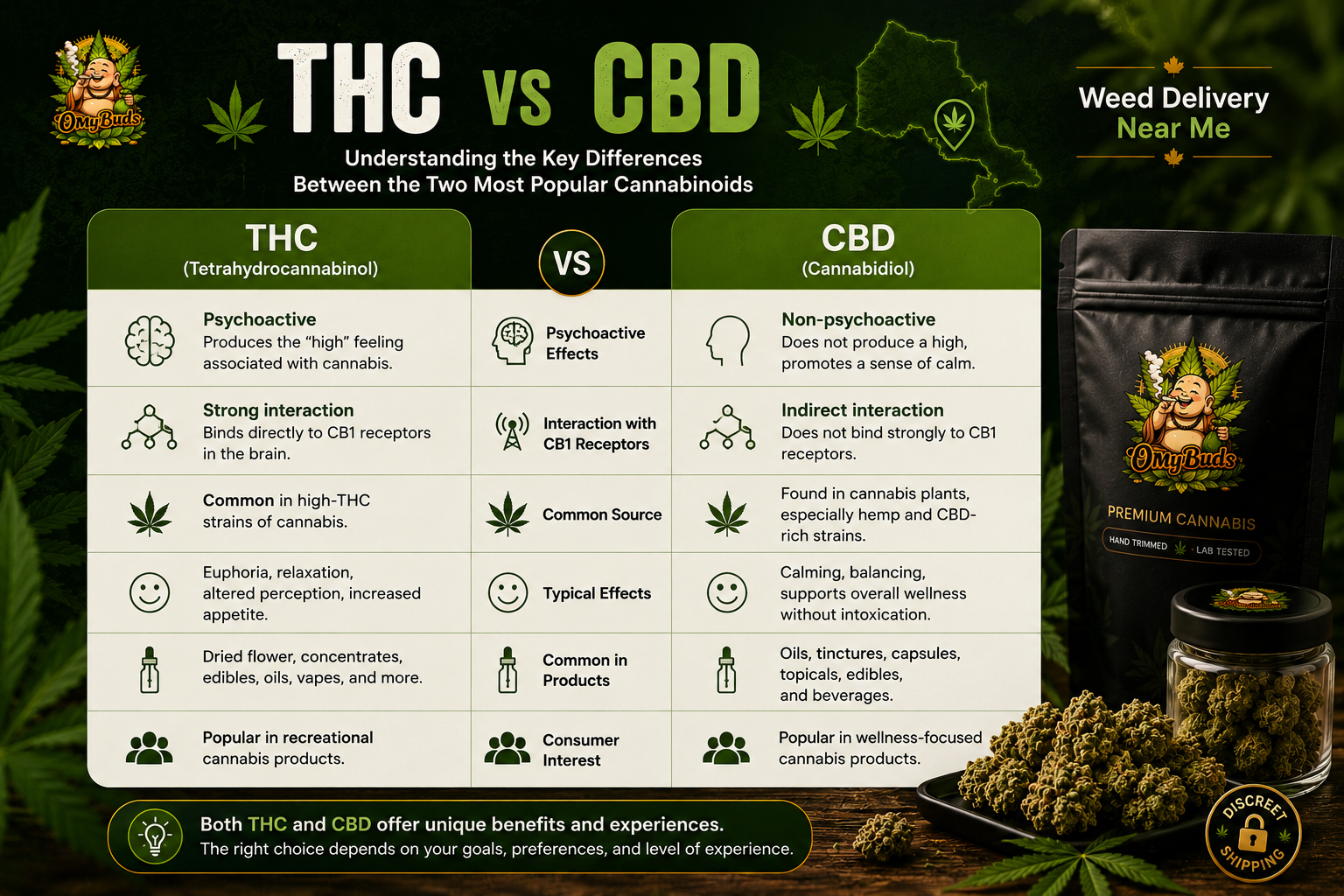
When comparing THC vs CBD, the biggest difference is that THC is psychoactive, while CBD is non-intoxicating. Both cannabinoids come from the cannabis plant, but they interact with the body in different ways and can contribute to different consumer experiences.
THC (tetrahydrocannabinol) is the cannabinoid most commonly associated with the traditional cannabis “high.” CBD (cannabidiol), on the other hand, does not produce intoxicating effects and is commonly found in a wide range of wellness-focused cannabis products.
Many cannabis strains and cannabis products contain both THC and CBD in varying ratios. Whether you’re exploring dried cannabis flower, edibles, concentrates, or oils, understanding the difference between THC and CBD can help you choose products that align with your preferences and experience level.
Key Differences Between THC and CBD
Benefits of Cannabis
Cannabis has been used for centuries for recreational, wellness, and cultural purposes. Today, consumers continue to explore cannabis because of the wide variety of products, cannabinoid profiles, and experiences available in Canada’s legal cannabis market.
People may choose cannabis products for different reasons, including relaxation, social enjoyment, personal wellness routines, or simply exploring different cannabis strains and product formats. From dried cannabis flower and pre-rolls to edibles, concentrates, and CBD products, there are more options available than ever before.
Common Reasons People Explore Cannabis
- Relaxation and unwinding
- Recreational and social experiences
- Exploring different cannabis strains
- Discovering unique cannabinoid and terpene profiles
- Accessing a variety of cannabis product formats
Factors That Influence the Cannabis Experience
Every cannabis experience is unique. Factors such as THC and CBD content, terpene profiles, product type, and individual tolerance can all influence how a product is perceived.
Understanding these differences can help consumers make more informed choices when exploring legal cannabis products and finding options that best match their preferences.
Looking to explore different cannabis products? Browse Omybuds’ selection of cannabis flower, edibles, concentrates, and CBD products available for fast weed delivery in Ontario.
Cannabis Strains Explained
Not all cannabis plants are the same. Through years of cultivation and selective breeding, growers have developed thousands of cannabis strains, each with its own unique combination of cannabinoids, terpenes, aromas, and characteristics. A cannabis strain is a specific genetic variety of the cannabis plant. Different strains can contain varying levels of THC, CBD, and other cannabinoids, which contribute to differences in flavor, aroma, appearance, and overall product profile.
Today, cannabis strains play an important role in Canada’s legal cannabis market, helping consumers explore a wide range of dried cannabis flower, pre-rolls, concentrates, and other cannabis products. Modern strains are commonly categorized as Indica, Sativa, or Hybrid, although many consumers now look beyond these labels and consider cannabinoid content, terpene profiles, and product quality when comparing cannabis products. Understanding cannabis strains provides a useful foundation for exploring cannabis genetics, strain families, and the many varieties available through licensed retailers such as Omybuds.
How New Cannabis Strains Are Created
Most modern cannabis strains are created through selective breeding, a process in which cultivators cross different cannabis plants to combine desirable genetic traits. The goal is to develop new strains with unique characteristics, including cannabinoid content, terpene profiles, aroma, flavor, and plant structure.
After crossing parent plants, breeders select offspring that consistently express the traits they are looking for. Over multiple generations, these characteristics become more stable, resulting in a distinct cannabis strain.
Because of ongoing breeding and innovation, today’s legal cannabis market offers thousands of unique strains. This genetic diversity allows consumers to explore a wide range of cannabis flowers, concentrates, edibles, and other cannabis products with different profiles and characteristics.
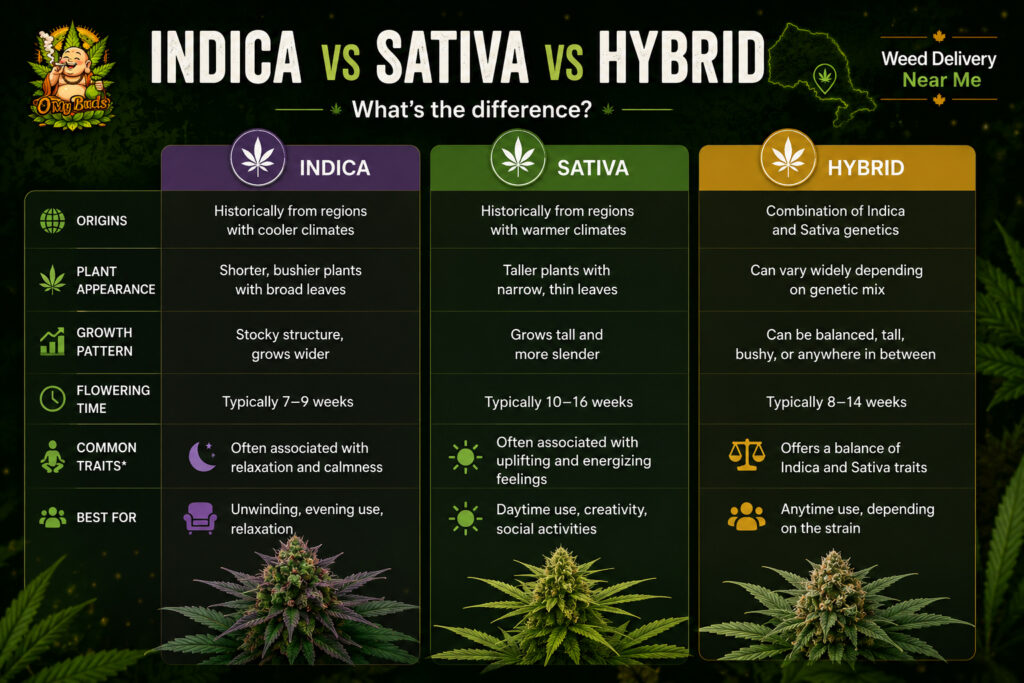
Indica vs Sativa vs Hybrid
Indica, Sativa, and Hybrid are the three most common categories used to describe cannabis strains. While these labels have been used for decades, modern cannabis science suggests that cannabinoid and terpene profiles often provide a more complete picture of a product’s characteristics.
Looking Beyond the Label
While Indica, Sativa, and Hybrid remain useful strain categories, many consumers also consider THC levels, CBD content, terpene profiles, and product quality when choosing dried cannabis flower or other cannabis products. Understanding these categories is a helpful starting point, but modern cannabis products are often more complex than a single label can describe.
Understanding Haze, Kush, and Skunk Families
Haze, Kush, and Skunk are three of the most influential cannabis families in modern cannabis genetics. Rather than referring to individual cannabis strains, these names represent broader genetic lineages that have helped shape many of the hybrid strains available today.
Haze
Haze genetics are known for their strong influence on modern cannabis breeding. Many popular hybrid strains can trace part of their ancestry back to the Haze family.
Kush
Originating from the Hindu Kush region of Central Asia, Kush genetics have become one of the most widely used foundations in modern cannabis cultivation and strain development.
Skunk
Skunk was one of the earliest cannabis families used in large-scale breeding programs. Its stable genetics helped contribute to the development of countless modern cannabis strains.
Why These Families Matter
Many of today’s cannabis products contain genetics from Haze, Kush, Skunk, or a combination of all three. Understanding these strain families can provide useful insight into the history and evolution of cannabis genetics, although cannabinoid content and terpene profiles often provide a more complete picture of a product’s characteristics.
How Cannabis Strains Get Their Names
If you’ve ever seen names like Blue Dream, Northern Lights, Pink Kush, or Gelato, you may have wondered how cannabis strains get their names. Unlike scientific plant classifications, cannabis strain names are often created by breeders to reflect a strain’s genetics, aroma, flavor, appearance, or unique characteristics.
Some strains are named after their parent genetics, while others take inspiration from fruity aromas, dessert-like flavors, colors, locations, or elements of cannabis culture. As a result, strain names can be creative, memorable, and sometimes even humorous.
However, a strain name only tells part of the story. Two strains with similar names may have very different cannabinoid and terpene profiles, while unrelated strains can share similar characteristics.
Understanding how cannabis strains are named provides insight into cannabis genetics and breeding history while helping consumers better navigate the wide variety of cannabis products available in Canada’s legal cannabis market.
Cannabis Flower vs Edibles vs Concentrates
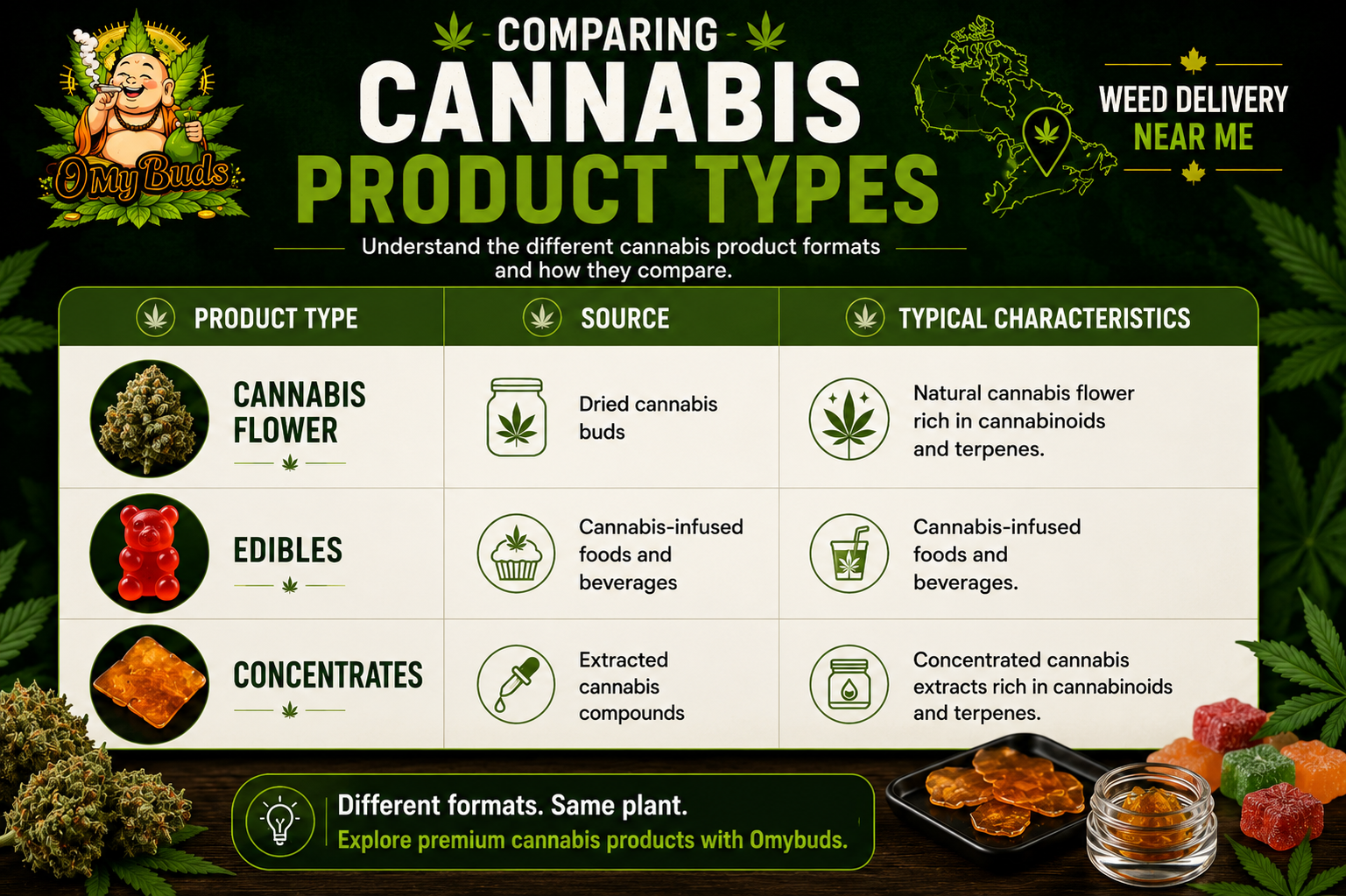
Cannabis products are available in many forms, but the three most popular categories are cannabis flower, edibles, and concentrates. While all originate from the cannabis plant, each offers a different product format and experience.
Cannabis Flower
Cannabis flower, also known as dried cannabis flower, is the harvested bud of the cannabis plant. It remains the most traditional and widely available cannabis product in Canada.
Edibles
Cannabis edibles are food and beverage products infused with cannabinoids. Popular options include gummies, chocolates, beverages, and other infused products.
Concentrates
Cannabis concentrates are created by extracting cannabinoids and terpenes from the cannabis plant. Common examples include live resin, rosin, shatter, hash, and wax.
Comparing Cannabis Product Types
Whether you’re exploring cannabis flower, edibles, or concentrates, each category offers unique cannabinoid profiles, formats, and characteristics. Understanding these differences can help consumers compare cannabis products and find options that match their preferences and experience level.
Looking to explore different cannabis products? Browse Omybuds’ collection of cannabis flower, edibles, concentrates, and CBD products, available for fast and discreet weed delivery across Ontario.
Frequently Asked Questions About Cannabis
What Is Cannabis?
Cannabis is a plant that contains naturally occurring compounds called cannabinoids. The most well-known cannabinoids are THC and CBD, which interact with the body’s Endocannabinoid System and contribute to the unique characteristics of cannabis products.
Is Cannabis Legal in Canada?
Yes. Recreational cannabis is legal in Canada for adults under federal law. Cannabis products can be purchased through licensed retailers and approved online platforms, subject to provincial regulations and age requirements.
What Is the Difference Between Cannabis and Marijuana?
The terms cannabis and marijuana are often used interchangeably. However, cannabis is the scientific name of the plant, while marijuana is a common term used to describe cannabis products that contain significant levels of THC.
What Is Dried Cannabis Flower?
Dried cannabis flower refers to the harvested and cured buds of the cannabis plant. It is one of the most popular cannabis product categories and contains naturally occurring cannabinoids, terpenes, and other plant compounds.
What Are Cannabinoids?
Cannabinoids are naturally occurring compounds found in the cannabis plant. More than 100 cannabinoids have been identified, including THC, CBD, CBG, and CBN. These compounds interact with the body’s Endocannabinoid System.
What Is the Difference Between THC and CBD?
THC is a psychoactive cannabinoid that can produce intoxicating effects, while CBD is non-intoxicating and does not create the same euphoric experience. Both cannabinoids originate from the cannabis plant but interact with the body differently.
What Are Cannabis Strains?
Cannabis strains are genetic varieties of the cannabis plant that may differ in cannabinoid content, terpene profiles, aroma, flavor, appearance, and cultivation characteristics.
What Is the Difference Between Indica, Sativa, and Hybrid?
Indica, Sativa, and Hybrid are traditional categories used to classify cannabis strains. Today, many experts also consider cannabinoid and terpene profiles when evaluating cannabis products, as these factors often provide a more complete understanding of a strain’s characteristics.
What Are Cannabis Terpenes?
Terpenes are aromatic compounds naturally found in cannabis and many other plants. They contribute to the aroma, flavor, and overall profile of cannabis products.
What Types of Cannabis Products Are Available?
Cannabis products are available in many forms, including dried cannabis flower, pre-rolls, edibles, concentrates, oils, capsules, beverages, and topical products. Each category offers a different way to experience cannabinoids and terpenes.
How Are New Cannabis Strains Created?
New cannabis strains are developed through selective breeding, where cultivators combine genetics from different parent plants to create unique cannabinoid profiles, terpene characteristics, and plant traits.
Why Is It Important to Understand Cannabis?
Understanding cannabis can help consumers make more informed decisions about cannabis products, cannabinoids, strains, and product formats. Learning how cannabis works also provides a better foundation for exploring the legal cannabis market in Canada.
What is legal cannabis?
Legal cannabis refers to cannabis products sold through licensed retailers and regulated by Canadian law.
What is a terpene profile?
A terpene profile describes the aromatic compounds present in a cannabis product and helps distinguish one strain from another.
**This article is intended for educational purposes only and does not constitute medical advice.
Written by Omybuds Editorial Team
Reviewed for accuracy: June 2026