
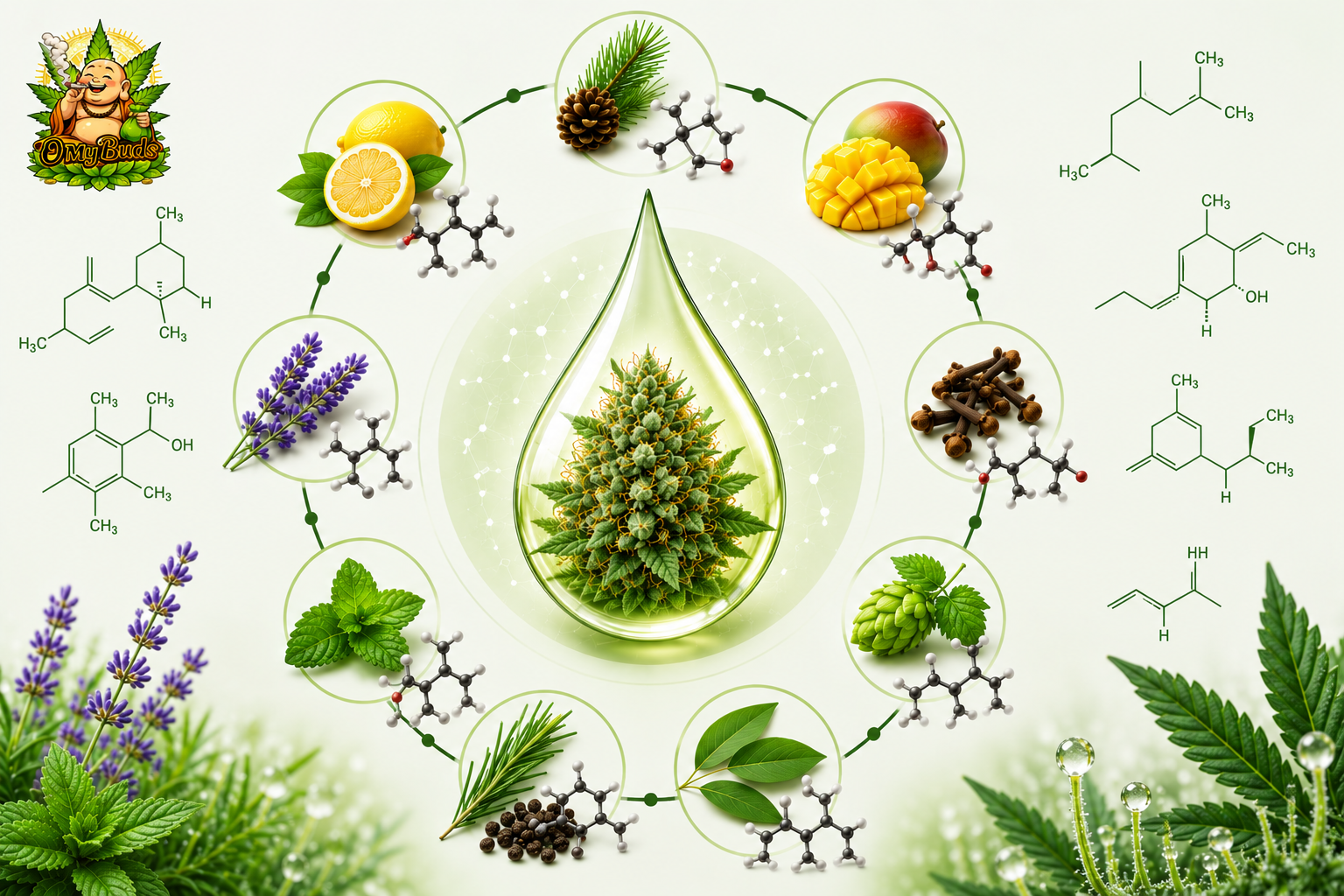
Learn about cannabis terpenes, their effects, benefits, and how they work with CBD for a better experience.
What Are Terpenes?
Naturally occurring terpenes are found in many plants, including hemp and cannabis. These compounds create the distinctive scents and flavours associated with fruits, herbs, and flowers. For example, limonene gives lemons their fresh citrus aroma, while pinene contributes to the crisp scent of pine trees.
Within cannabis plants, terpenes are produced in the trichomes — the small resin glands that coat the flower. They play a major role in shaping each strain’s flavour, aroma, and overall character.
Today, many consumers in Canada review terpene profiles to better understand the qualities of dried flower, concentrates, vape cartridges, and hemp-derived CBD extracts.
Why Terpenes Matter in Cannabis?
Terpenes contribute more than just flavour and aroma. When present alongside cannabinoids like THC and CBD, they may also influence the overall experience and how certain products are perceived by consumers.
Researchers have identified more than 150 terpene varieties within cannabis and hemp plants. Each strain contains its own unique profile, which helps explain why two options with similar cannabinoid content can still feel noticeably different.
Many consumers now pay attention to terpene content instead of focusing only on THC or CBD percentages. Across Canada’s regulated market, detailed terpene information is frequently included on packaging to help shoppers compare strains and make more informed selections.
How Terpenes and Cannabinoids Work Together?
Terpenes and cannabinoids naturally occur together within hemp and cannabis plants. Their relationship is commonly referred to as the “entourage effect” a term used to describe how multiple plant compounds may interact to shape the overall experience.
Although research in this area is still evolving, many consumers consider flavour, aroma, and extract composition before choosing concentrates, oils, vape cartridges, or infused formulations.
Different terpene profiles may influence:
- Aroma and flavour perception
- Relaxation and mood support
- Overall balance of the experience
- Sensory depth and product character
Because of this, terpene content is often reviewed alongside cannabinoid levels when comparing flower, edibles, oils, and vaporizer options.
Common Terpenes Found in Cannabis
Different strains contain both dominant and secondary aromatic compounds. Some contribute strong citrus, earthy, floral, or pine-like notes, while others add subtle complexity to the overall profile.
Below are several commonly found aromatic compounds in regulated Canadian products.
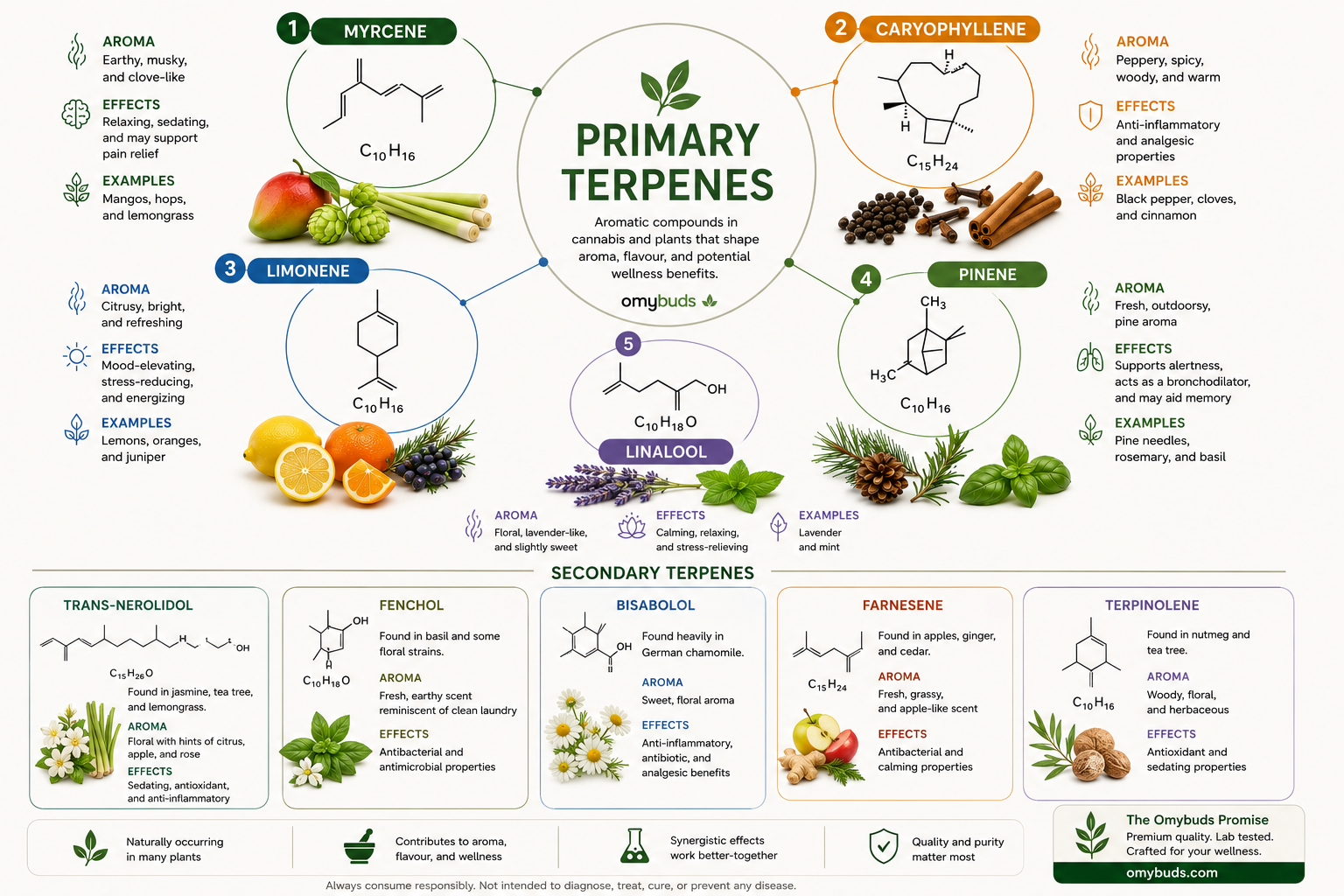
Each cannabis strain contains a unique terpene profile that contributes to its aroma, flavour, and overall character. Learn more about terpene research through the National Institutes of Health (NIH).
Potential Benefits of CBD and Terpenes
Many users prefer full-spectrum hemp extracts with natural aromatic compounds because they may provide a more balanced overall experience.
Potential benefits may include:
– Enhanced relaxation
– Improved mood support
– Better stress management
– More natural flavour and aroma
– Greater synergy between plant compounds
Although research is still ongoing, many consumers report that terpene-rich cannabidiol products feel more effective than isolated
Understanding CBD Extract Types
Choosing CBD Products by Aroma and Effect
How Terpene Profiles Shape Cannabis Strains
Conclusion
Terpenes play an important role in shaping flavour, aroma, and the overall character of hemp-derived formulations. Understanding these natural profiles can help consumers make more informed choices when comparing oils, flower, concentrates, and vaporizer options in Canada.
As consumer awareness continues to grow, terpene content is becoming an increasingly important consideration when exploring different strains, extract types, and product experiences.
Explore terpene-rich formulations and educational resources through Omybuds.
Frequently Asked Questions
Do terpenes make CBD stronger?
Terpenes may influence the overall effects of CBD through what is commonly known as the entourage effect, although individual experiences can vary.
What is the best terpene for anxiety?
Linalool and myrcene are often associated with calming and relaxing properties, though effects may differ from person to person.
Are terpenes psychoactive?
Terpenes themselves are generally not intoxicating. However, they may influence how cannabinoids interact with the body and overall perception of certain effects.
Do all CBD products contain terpenes?
No. CBD isolate formulations typically contain only purified cannabidiol, while full-spectrum and broad-spectrum extracts usually preserve a wider range of naturally occurring hemp compounds.