
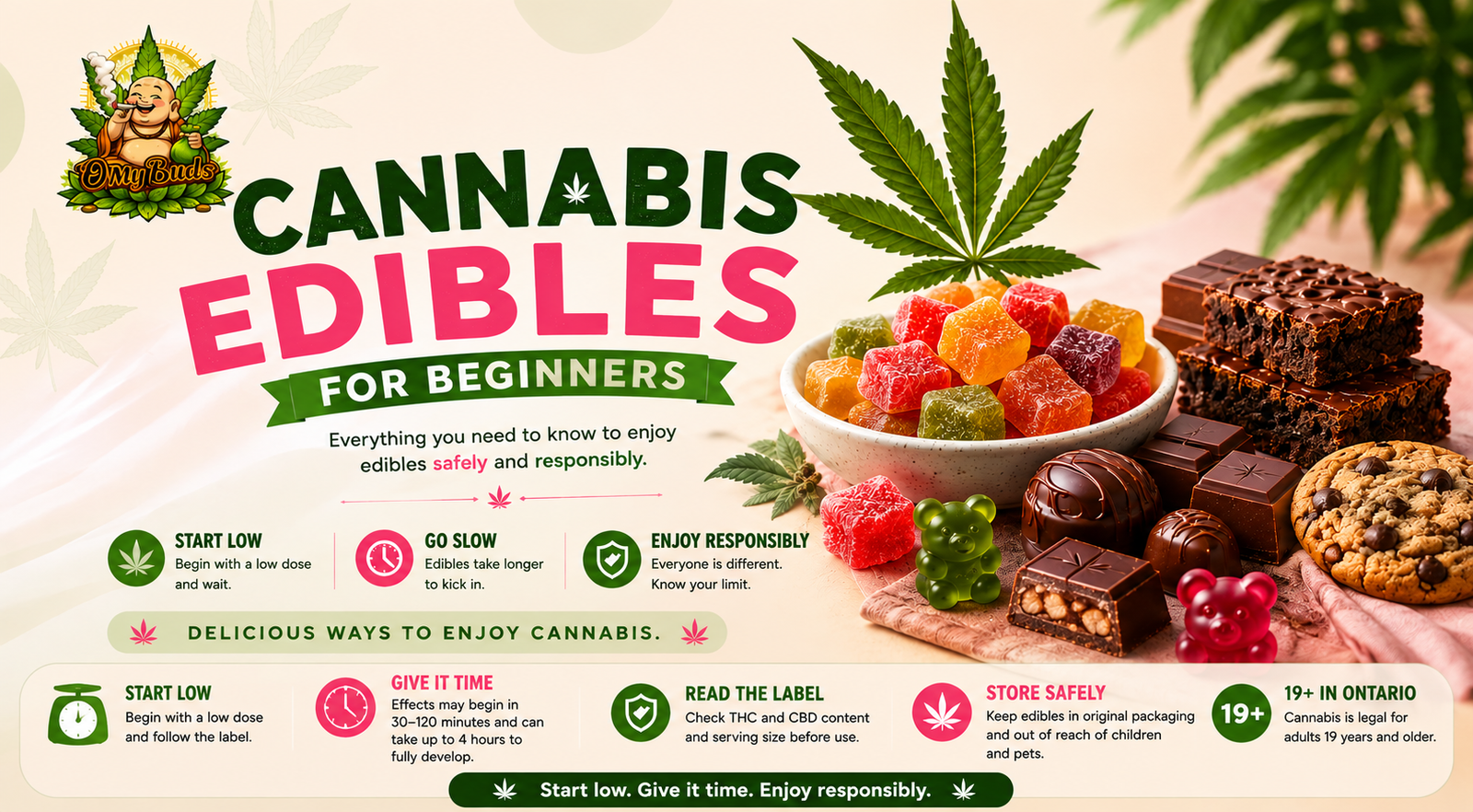
Learn what cannabis edibles are, how they work, how long they last, beginner THC dosage tips, common mistakes to avoid, and how to choose the right edible for your first experience.
What Are Cannabis Edibles?
Cannabis edibles are food and beverage products infused with cannabinoids that are consumed by eating or drinking rather than smoking or vaping. According to Health Canada, legal cannabis edibles are available in many forms, including chocolates, beverages, baked goods, and Cannabis Gummies.
The two primary cannabinoids found in cannabis edibles are THC and CBD. THC is the psychoactive compound responsible for the intoxicating effects of cannabis, while CBD is non-intoxicating and does not typically produce a high. Depending on the product, consumers can choose THC Gummies, CBD Gummies, or products containing a combination of both cannabinoids.
For many people, Cannabis Edibles for Beginners provide a discreet, smoke-free, and convenient way to experience cannabis. Unlike smoking or vaping, edibles are processed through the digestive system before entering the bloodstream, which means the effects usually take longer to begin but often last longer.
Related: What Is Cannabis?
Types of Cannabis Edibles
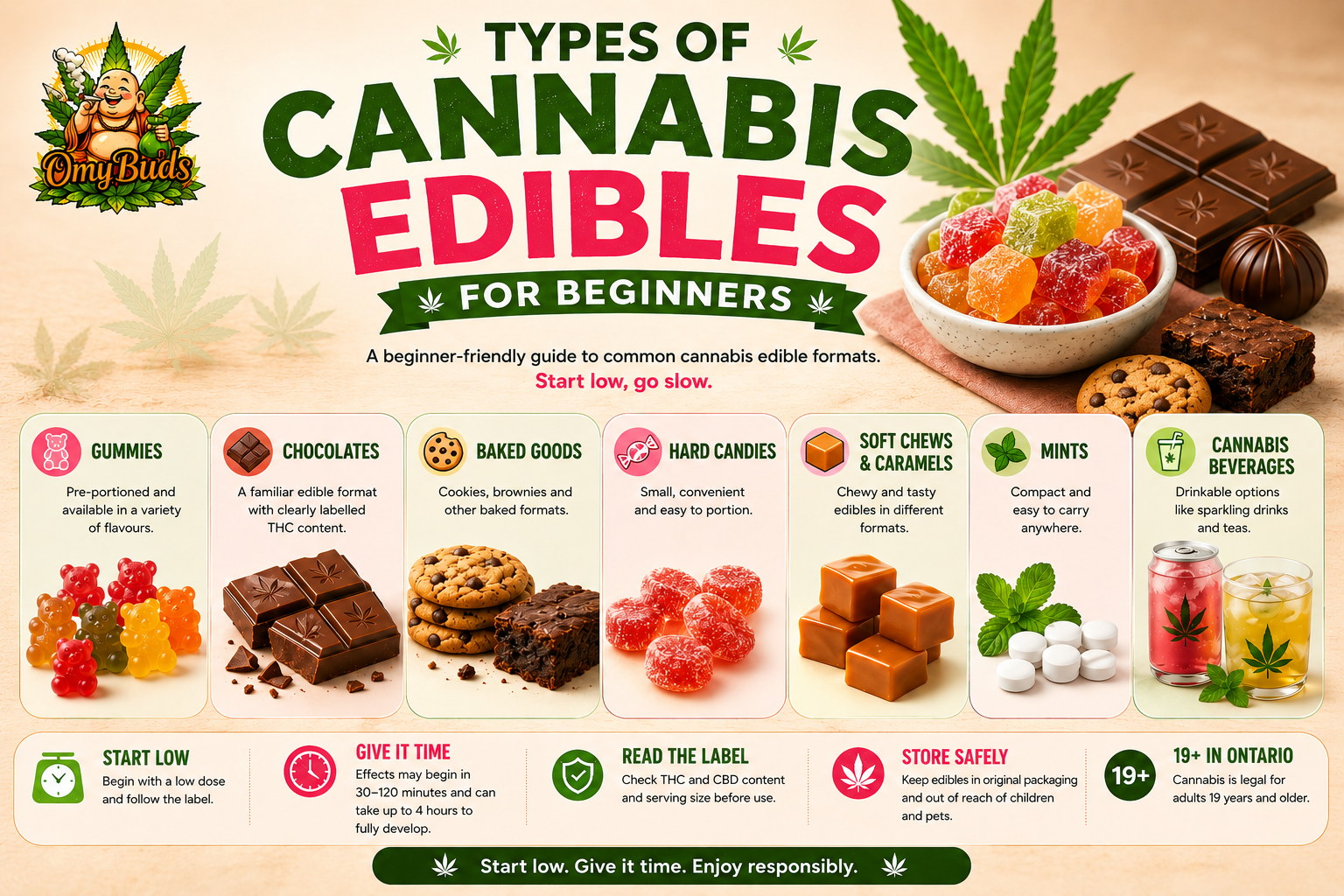
Cannabis edibles come in a variety of foods and drinks, making it easy to find a format that fits different preferences. In Canada, common types include THC gummies, chocolates, baked goods, candies, and cannabis beverages. According to Health Canada, edible cannabis includes products such as candies, chocolates, cookies, baked goods, and cannabis beverages.
Gummies, Candies & Chocolates
THC gummies, cannabis chocolates, and candies are popular because they come in convenient, pre-portioned formats. Always check the label, as THC and CBD content can vary by product and serving.
Baked Goods
Cannabis cookies, brownies, and other baked goods offer a familiar edible format. Portion size and THC content matter, so use the product label rather than the size of the food as a guide.
Mints & Hard Candies
Small formats such as cannabis mints and hard candies are compact and easy to portion when sold as clearly labelled units. Because they can resemble ordinary food or candy, they should always be kept in their original packaging and stored securely.
Cannabis Beverages
Cannabis beverages offer a drinkable alternative to traditional edibles and can include products such as sparkling beverages, teas, and other ready-to-drink cannabis products. As with other edibles, check the THC content and serving information before consuming.
Whatever format you choose, remember that edible cannabis takes longer to produce effects than smoked or vaped cannabis, and the effects can last considerably longer. The product format may vary but the same rule applies: know the THC content and give it time.
For legal edible cannabis sold in Canada, the maximum permitted amount is 10 mg of THC per immediate container, regardless of how many individual pieces it contains.
How Do Cannabis Edibles Work?
Learn why cannabis edibles take longer to take effect but typically produce longer-lasting effects than smoking or vaping.
| Smoking or Vaping | Cannabis Edibles |
| Lungs | Digestive System |
| THC enters the bloodstream within minutes. | THC is absorbed through the stomach and intestines. |
| THC quickly enters the bloodstream and reaches the brain. | After absorption, THC passes through the liver, where part of it is converted into 11-hydroxy-THC before entering the bloodstream. |
| Effects begin: Within minutes | Effects begin: 30–120 minutes |
| Typical duration: 2–4 hours | Duration: 4–8 hours (or longer) |
When cannabis is smoked or vaped, THC is absorbed through the lungs and quickly enters the bloodstream, allowing the effects to begin within minutes. Because it bypasses digestion, the effects generally wear off sooner than those of cannabis edibles.
Cannabis edibles follow a different path. After being eaten, THC passes through the digestive system and is metabolized by the liver before reaching the bloodstream. During this process, part of the THC is converted into 11-hydroxy-THC, a metabolite that is often associated with stronger and longer-lasting effects than inhaled cannabis. As a result, edibles usually take 30–120 minutes to begin working but may last 4–8 hours or more, depending on the dose, metabolism, and whether you’ve eaten recently.
For Cannabis Edibles for Beginners, understanding this slower onset is important because many first-time users mistakenly consume additional THC Gummies or Cannabis Gummies before the initial serving has taken effect.
Whether you choose THC Gummies or CBD Gummies, always read the product label carefully and allow enough time for the effects to develop before consuming more.
Individual experiences vary depending on body weight, metabolism, tolerance, food intake, and the amount of THC consumed.
Beginner Tip:
If you’re trying THC gummies or other cannabis gummies for the first time, be patient. Although effects may begin within 30–120 minutes, they can take up to four hours to fully develop. Taking another serving too soon may lead to a much stronger experience than intended.
How Long Do the Effects of Cannabis Edibles Last?
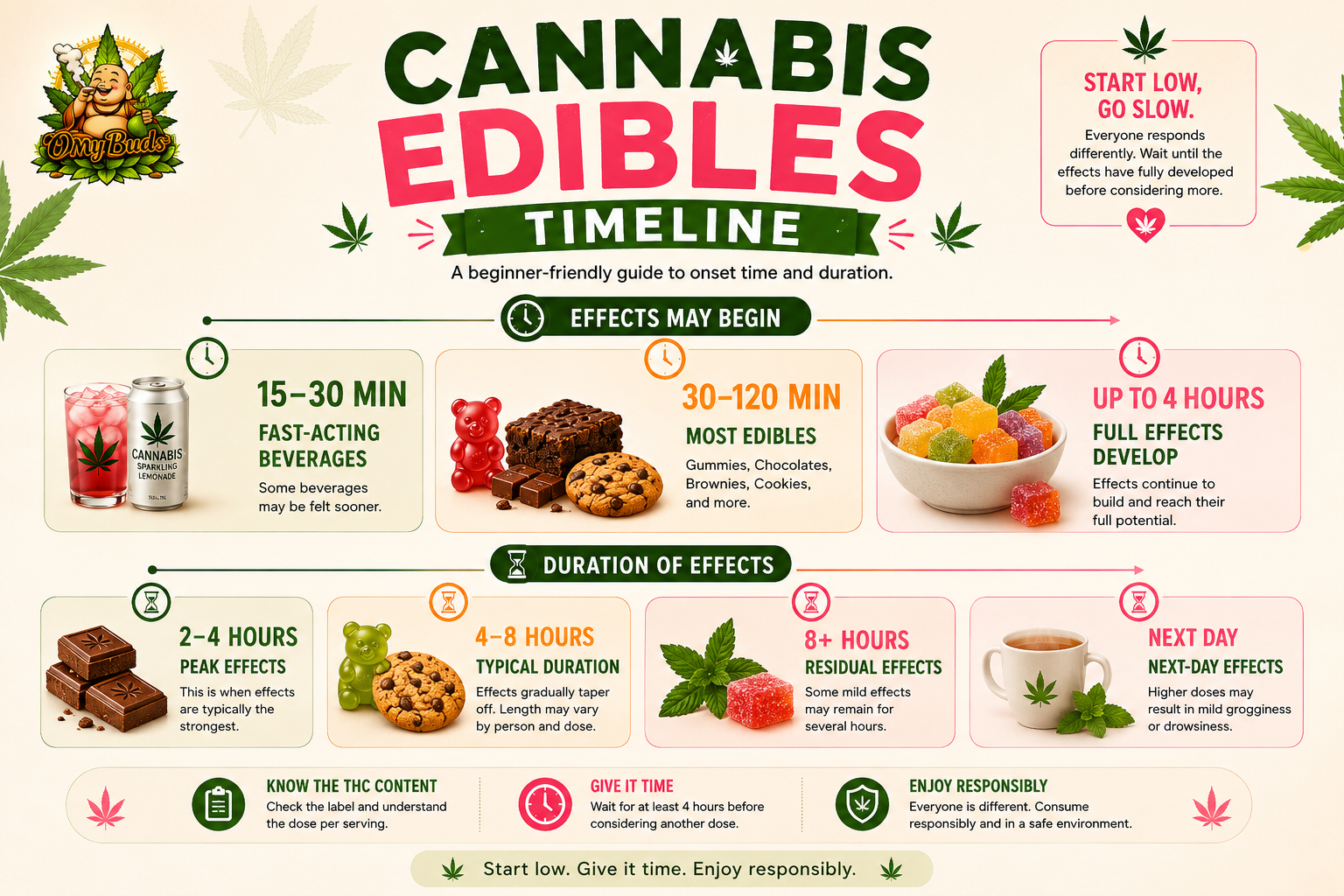
The effects of cannabis edibles typically last longer than smoked or vaped cannabis. While everyone’s experience is different, effects may last 4–8 hours or longer, depending on the amount of THC consumed, individual metabolism, tolerance, food intake, and the type of edible.
Cannabis Edibles Timeline
| Time | What You May Experience |
| 0 minutes | The edible is consumed and digestion begins. |
| 30–120 minutes | Effects may begin |
| 2–4 hours | Effects may reach their strongest point. |
| 4–8 hours | Effects generally begin to fade. |
| 8+ hours | Some residual or after-effects may remain. |
Note: This timeline is only a general guide. The onset, intensity, and duration of cannabis edibles can vary considerably from person to person.
One of the biggest differences between smoking or vaping cannabis and consuming edibles is how quickly the effects are felt. Inhaled cannabis typically takes effect much faster, while edibles must first pass through the digestive system. This means the onset and overall experience can depend heavily on your digestion, metabolism, dose, and individual sensitivity.
That longer-lasting experience is part of what makes cannabis edibles appealing, but it is also why starting with a low amount and allowing enough time before taking more is especially important. Because the effects can continue building for hours, planning when and where you consume an edible can make the experience much more manageable.
For beginners, the experience can vary widely, but commonly reported effects may include:
- An elevated or euphoric mood
- Heightened sensory perception
- A relaxed, heavy, or sometimes floating sensation
- Changes in the perception of time
With a higher amount of THC, however, these effects may become more intense or uncomfortable than expected. Choosing an appropriate product, understanding its THC content, and starting with a lower amount are therefore particularly important for anyone trying edibles for the first time.
When Do Edibles Reach Their Peak?
After consuming THC gummies, cannabis gummies, or other THC-containing edibles, the strongest effects may not occur immediately. Effects can continue to build for several hours, with peak effects often occurring around 2–4 hours after consumption.
This delayed peak is especially important to understand for anyone exploring cannabis edibles for beginners, as taking another serving too soon can result in stronger and longer-lasting effects than expected.
Choosing the Right THC Strength for Beginners
When trying cannabis edibles for the first time, THC strength matters just as much as timing. Because edibles take longer to kick in than smoked or vaped cannabis, taking more too soon can lead to a stronger experience than expected.
In Canada, legal cannabis edibles follow THC limits and standardized labelling requirements, but the same amount of THC can still affect people differently depending on tolerance, metabolism, food intake, and individual sensitivity.
For beginners, keep it simple:
- Always read and follow the product label.
- Start with the lowest available THC amount appropriate for the product.
- Allow enough time for the effects to develop before considering more.
- Check both THC per serving and THC per package.
Understanding THC Amounts in Edibles
THC amounts are better viewed as an indication of relative strength, rather than a guarantee of how an edible will feel.
| THC Amount | Relative Strength | What Beginners Should Know |
| 1–2.5 mg THC | Very low | A lower-THC amount that may be more approachable for first-time consumers. |
| 2.5–5 mg THC | Low to moderate | Effects may become more noticeable, depending on individual sensitivity. |
| 5–10 mg THC | Moderate to strong | May feel considerably stronger for beginners or THC-sensitive consumers. |
| 15–25 mg+ THC | High | Not generally beginner-oriented and may produce an intense or uncomfortable experience. |
Important: These ranges are for general educational context, not personalized dosing recommendations. THC affects everyone differently.
One thing beginners should remember is that THC strength is not a target to work toward. With edibles, the goal isn’t to choose the highest milligram number — it’s to understand how your body responds.
If you’re exploring THC gummies or cannabis edibles for the first time, read the label, understand how much THC is in each serving, and give the effects enough time to develop.
Common Beginner Mistakes
Even with the right product, a few simple mistakes can make a first edible experience stronger or less comfortable than expected. Here are some of the most common ones to avoid.
Taking More Too Soon
Cannabis edibles take longer to kick in than smoking or vaping, with effects often beginning within 30–120 minutes. Taking another serving because you “don’t feel anything yet” can lead to stronger effects later. Give the first serving enough time to work before considering more.
Mixing Cannabis Edibles with Alcohol
Combining THC edibles with alcohol can increase impairment and may contribute to dizziness, nausea, or a more intense experience. For beginners, avoiding the combination is the safer approach.
Ignoring the Product Label
Check the label for THC and CBD content, serving size, ingredients, allergens, and storage instructions. Products such as THC gummies and CBD gummies may look similar but can have very different effects.
Using Too Much THC
More THC doesn’t necessarily mean a better experience. Consuming too much may cause anxiety, confusion, dizziness, nausea, increased heart rate, or excessive drowsiness, with uncomfortable effects potentially lasting for several hours.
For beginners, the takeaway is simple: read the label, understand the THC content, give edibles time to work, and don’t rush the experience.
Choosing the Right Cannabis Edible for Your Goals
The right cannabis edible depends on what fits your preferences and routine. For beginners, a clearly labelled product with an easy-to-understand serving size can make the experience simpler and more predictable.
| Your Goal | Product Type to Consider |
| Easy portion control | THC Gummies or CBD Gummies |
| Familiar treat | Cannabis Chocolate |
| No chewing / discreet format | Cannabis Mints |
| Ready-to-drink option | Cannabis Beverages |
Tip: Whatever format you choose, always check the label for THC and CBD content per serving before consuming.
Safe Use Tips for Beginners
A good first experience with cannabis edibles is less about getting everything perfect and more about giving yourself enough time, knowing what you’ve consumed, and choosing a comfortable setting.
Start Low and Give It Time
If you’re new to edibles, choose a low-THC product, follow the label, and avoid taking more simply because you don’t feel anything right away. Effects may begin within 30–120 minutes, but can take up to four hours to fully develop.
Consumer tip: Before you start, check how much THC is in each serving and the entire package. It’s much easier to keep track before you’ve eaten it than afterwards.
Consider When You Last Ate
Food can influence how quickly and strongly an edible feels, so your experience on an empty stomach may not be the same as after a meal. Rather than trying to use specific foods to make THC “work better,” pay attention to what and when you’ve eaten and learn how your body responds.
Consumer tip: If you’re trying a new edible, keeping the conditions familiar — including whether you’ve recently eaten — can make it easier to understand how that product affects you.
Choose the Right Time and Setting
Edible effects can last for several hours, so choose a time when you don’t need to drive, operate equipment, or handle anything that requires your full attention. A familiar, comfortable setting can also make a first experience easier to manage. Health Canada notes that edible effects can last many hours and impairment may persist even longer.
Consumer tip: For your first time, avoid squeezing an edible into a busy schedule. Give yourself enough time so you’re not watching the clock or worrying about somewhere you need to be.
Keep Water Nearby — and Skip the Alcohol
Having water or another non-alcoholic drink nearby is practical, especially during a longer edible experience. Avoid combining cannabis with alcohol, as the combination can increase impairment and the risk of adverse effects.
Consider Having Someone You Trust Nearby
If it’s your first experience with THC edibles, being around someone you trust can provide reassurance if the effects feel stronger or last longer than expected. Health Canada similarly recommends a safe environment and, in some contexts, having someone trusted present when using cannabis.
Store Edibles Like Cannabis, Not Candy
Keep cannabis edibles in their original packaging, securely away from children and pets. Store them in a cool, dry place and follow the storage instructions on the label to help maintain product quality. Gummies, chocolates, and other edibles can easily be mistaken for ordinary food or candy, so safe storage matters.
The simplest rule for beginners: know what you took, give it time, and don’t rush the experience.
Buying Cannabis Edibles Online in Ontario
If you’re shopping for cannabis edibles online in Ontario, start by understanding what you’re buying. Check the THC and CBD content, serving size, ingredients, and Health Canada Packaging & Labelling before making your choice.
In Canada, cannabis laws and retail rules vary by province and territory. Consumers should purchase from authorized retailers and follow the regulations where they live. Legal cannabis products also include standardized packaging, health warnings, THC information, and an excise stamp.
Whether you’re trying cannabis edibles for the first time or looking to explore new products, our goal is to help you make informed choices with clear product information, transparent THC labelling, and a carefully selected range of cannabis edibles.
Ready to explore cannabis edibles? Browse our selection of THC gummies, and other beginner-friendly edible products.
Explore the Omybuds Edibles Collection
Medical Disclaimer: This guide is intended for educational purposes only and should not be considered medical advice. Always follow the product label and applicable cannabis laws in your province.
FAQ
Are cannabis edibles stronger than smoking?
Cannabis edibles don’t necessarily contain more THC than smoked cannabis, but many people experience stronger or longer-lasting effects because THC is processed differently by the body. Individual responses vary depending on dose, tolerance, metabolism, and the product consumed.
Can beginners use THC gummies?
Yes. Many beginners choose THC gummies because they are pre-portioned and easy to understand. Start with a low-THC product, follow the label, and give the effects enough time to develop before taking more.
How long should I wait before taking another edible?
Wait until the effects have had enough time to fully develop before considering another serving. For many edible products, this may take several hours. Always follow the directions provided on the product label.
Can I drive after consuming cannabis edibles?
No. Do not drive or operate machinery while impaired by cannabis. Edible effects can last much longer than expected, and impairment may continue even after the strongest effects begin to fade.
How should cannabis edibles be stored?
Store cannabis edibles in their original packaging in a cool, dry place away from children and pets. Because many edibles resemble ordinary food or candy, safe storage is especially important.
What’s the difference between THC and CBD edibles?
THC edibles may produce intoxicating effects, while CBD edibles are generally non-intoxicating. Some products contain both cannabinoids, so always check the product label before consuming.
**Written by Omybuds Editorial Team